It's now old news, but still congrats to Australian Author Shaun Tan for the Academy Award for his animated film of his book The Lost Thing. A search for suitable clips produced only very short trailers, so here instead is:
Note for Jay and mates: No, I didn't get paid anything by Shaun Tan, the Academy Awards, The Motion Film industry, You Tube, The Internet, or anyone associated with any of the preceding. Or indeed anyone else.

Showing posts with label Books. Show all posts
Showing posts with label Books. Show all posts
Saturday, March 19, 2011


Wednesday, March 16, 2011
Sunday, March 13, 2011
Would you read this book? "The Apothecary"
This is the first part of an original "e-manuscript" for which all intellectual property rights are reserved by the author (me). Hope you enjoy these first 500 words - and hopefully not only because they're free.
-------------------------------------------
THE APOTHECARY
THE APOTHECARY
The Apothecary and the cat sat in the bath in companionable silence. Each lost in their own thoughts, or possibly in mute reflection. It was impossible to tell the difference.
The bath, a large old-fashioned clawed-foot type, sat in the centre of a sparse room notable only for the black and white floor tiling and stark white walls. Those privileged few who had seen this room could visualise this scene in a motivational poster with captions referring to attributes such as austerity or minimalism, or perhaps emptiness. If only it were not for the existence of the two occupants of the bath.
Many thought the Apothecary to be elderly, given the wispy nature of his long grey hair and the extraordinary length of his dirty grey beard; the later he kept in a straggly plait whilst the former was too sparse for such formality.
Little can be said of the cat, being a standard ginger tabby, other than the fact that its coat was waterlogged and its whiskers drooping. And, of course, the fact that it was sitting in a tub of water by its own choice.
The Apothecary was an enigma. His neighbours knew little about him. There was rarely any noise from his small, narrow terrace in a row of similarly non-descript houses. As far as those with whom he shared a driveway knew, he kept regular working hours and appeared to walk to whatever occupied his days. He kept no car, and had never been known to have gone away for any more than a single day.
Had anyone asked, none of the other residents would be able to recall any visitors. Salesmen and charity collectors did not call at the Apothecary’s house. The low iron-railed front gate was kept locked. And yet all would agree he was pleasant enough in his responses to casual greetings by others. The Apothecary did not initiate conversations.
In truth, the people in his street felt better acquainted with the cat. It spent its days sitting on the window sill of the only window that fronted the street, until the Apothecary came home in the afternoons and pulled down the blind. The cat was mainly motionless throughout the day, apart from the constant twitching of its tail. Not even the occasional bird that perched briefly in the pocket-sized and cemented front yard could produce any response from the cat.
A group of young hooligans once theorised that the cat was mechanical, and threw a rock at the window. The cat flattened its ears and bared its teeth, but if it hissed those beyond the glass could not hear it. There was, however, no doubt in their minds that the cat was glaring at them with such malevolence that they were convinced they should spend their energies elsewhere.
Had the cat cared, it would not have been uncomfortable with being referred to by its species. The Apothecary, had he known, would perhaps have been puzzled by the title given to him by the strangers that lived around him. He knew little more about chemistry than his cat. It was history that bound the two together.
To be continued ....
Friday, December 26, 2008
Bill Bryson's "Shakespeare"
Just finished reading Bill Bryson's "Shakespeare"; in some ways a disappointment, and in other ways an Interesting Read. Disappointment from the viewpoint that I was 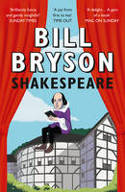 hoping for sheer escapism with chortling feel-good overtones. But for goodness sake, Bryson made me think. Again. I've been trying very hard not to do that. It's a hard habit to break.
There's the trademark Bryson Drollness throughout, but in the main 'tis a verily fine example of authentic research - with more than a mere suggestion of the need to Take Your Expectations Out of Their Paper Bag and Smash Them to Smithereens With a Very Heavy, Blunt Instrument.
TYEOTPBSTTSWVHBI; This is a new literary term that I've just coined - although conventional wisdom suggests it's not going to stand the test of time. Probably a bit long, and possibly a little too violent to get a PG13+ rating. You know how censorship is at the moment. And yes, despite the implied violence, it does lack punch.
Anyway, Bryson's book - as with any good research - does raise more questions than it answers. It was a surprise (at least to me) to find out that contemporary Thomas Heywood wrote or co-wrote more than five times the number of plays that Shakespeare wrote. So how come he didn't get his own Dewey number?
With his unique turn of phrase, Bryson variously describes Shakespeare's writing "as marked with a messy exuberance", "invigoratingly wayward", and parts that "defeat interpretation" by the experts. These are all virtues that will hearten Joe and Jane Blogger.
And isn't it great for the average semi-literate student of any age to find out that in the six surviving signatures of Shakespeare, he doesn't worry too much about spelling even his own name in any consistent way. Sheesh, the accepted spelling now in use isn't one that the writer himself ever used.
So here's a little homework for those replete with festive fare of all kinds. What the heck is meant by "swithald footed thrice the old, a nellthu night more and her nine fold". (King Lear) I've got a few interpretations of my own, but I think in this context it pretty much means I should sign off and go read something else.
hoping for sheer escapism with chortling feel-good overtones. But for goodness sake, Bryson made me think. Again. I've been trying very hard not to do that. It's a hard habit to break.There's the trademark Bryson Drollness throughout, but in the main 'tis a verily fine example of authentic research - with more than a mere suggestion of the need to Take Your Expectations Out of Their Paper Bag and Smash Them to Smithereens With a Very Heavy, Blunt Instrument.
TYEOTPBSTTSWVHBI; This is a new literary term that I've just coined - although conventional wisdom suggests it's not going to stand the test of time. Probably a bit long, and possibly a little too violent to get a PG13+ rating. You know how censorship is at the moment. And yes, despite the implied violence, it does lack punch.
Anyway, Bryson's book - as with any good research - does raise more questions than it answers. It was a surprise (at least to me) to find out that contemporary Thomas Heywood wrote or co-wrote more than five times the number of plays that Shakespeare wrote. So how come he didn't get his own Dewey number?
With his unique turn of phrase, Bryson variously describes Shakespeare's writing "as marked with a messy exuberance", "invigoratingly wayward", and parts that "defeat interpretation" by the experts. These are all virtues that will hearten Joe and Jane Blogger.
And isn't it great for the average semi-literate student of any age to find out that in the six surviving signatures of Shakespeare, he doesn't worry too much about spelling even his own name in any consistent way. Sheesh, the accepted spelling now in use isn't one that the writer himself ever used.
So here's a little homework for those replete with festive fare of all kinds. What the heck is meant by "swithald footed thrice the old, a nellthu night more and her nine fold". (King Lear) I've got a few interpretations of my own, but I think in this context it pretty much means I should sign off and go read something else.
Subscribe to:
Posts (Atom)